

Pulled Pork with a Gas Barbecue
Pulled pork is one of those dishes that gives you great satisfaction. A good pork butt, a well-balanced rub and a long, slow cook are the key ingredients for tender, juicy meat that’s perfect for pulling.
INGREDIENTS
- 1 whole pork butt
(about 3 kg) - Pork rub
- Mustard or seed oil
- Butter
- BBQ sauce
- Apple cider vinegar
PREPARATION
Starting with the meat
Brush the pork butt (or shoulder/Boston butt) with a little mustard or oil and coat it evenly with the rub.
If possible, let it rest in the fridge overnight, well covered.
The secret is indirect cooking
Prepare the gas barbecue, stabilizing it at an ideal temperature of 110-120°C (maximum tolerable range: 105°C – 130°C).
The cooking must be strictly indirect — with the meat never placed directly over the lit coals or burners — and with the lid closed. Place the meat in the center of the grill and light only the side burners, leaving the ones directly below the pork butt turned off. This way the pork will cook slowly without being directly exposed to the flame.
At the start of cooking (with the meat uncovered), add the smoking wood chunks or chips (e.g. apple, cherry or hickory) to the smoker box.
During the process, keep an eye on the heat and adjust the side burner knobs to keep it steady.
Try to open the lid as little as possible so you don’t lose temperature. As the hours go by, a bark will form on the surface of the meat — a dark, flavorful crust that will give your pulled pork even more character.
Wrapping the meat (the foil stage)
Around 70°C – 75°C internal temperature, the meat’s temperature will tend to stall due to the evaporation of its juices (the so-called stall). This is the moment to step in to push through the plateau and speed up cooking.
Once the bark is well formed, transfer the pork butt to an aluminum pan. Add a few knobs of butter, a bit of BBQ sauce and a small amount of apple cider vinegar, or wrap it tightly in a double layer of foil. Seal everything well.
Put the meat back on the barbecue, still in the center of the grill, keeping the burners under the meat off and the side ones lit.
Continue indirect cooking until the meat is extremely tender.
When is it ready?
Don’t rely on cooking time alone. The most important sign is the internal temperature of the meat, with a final target of 93°C – 96°C.
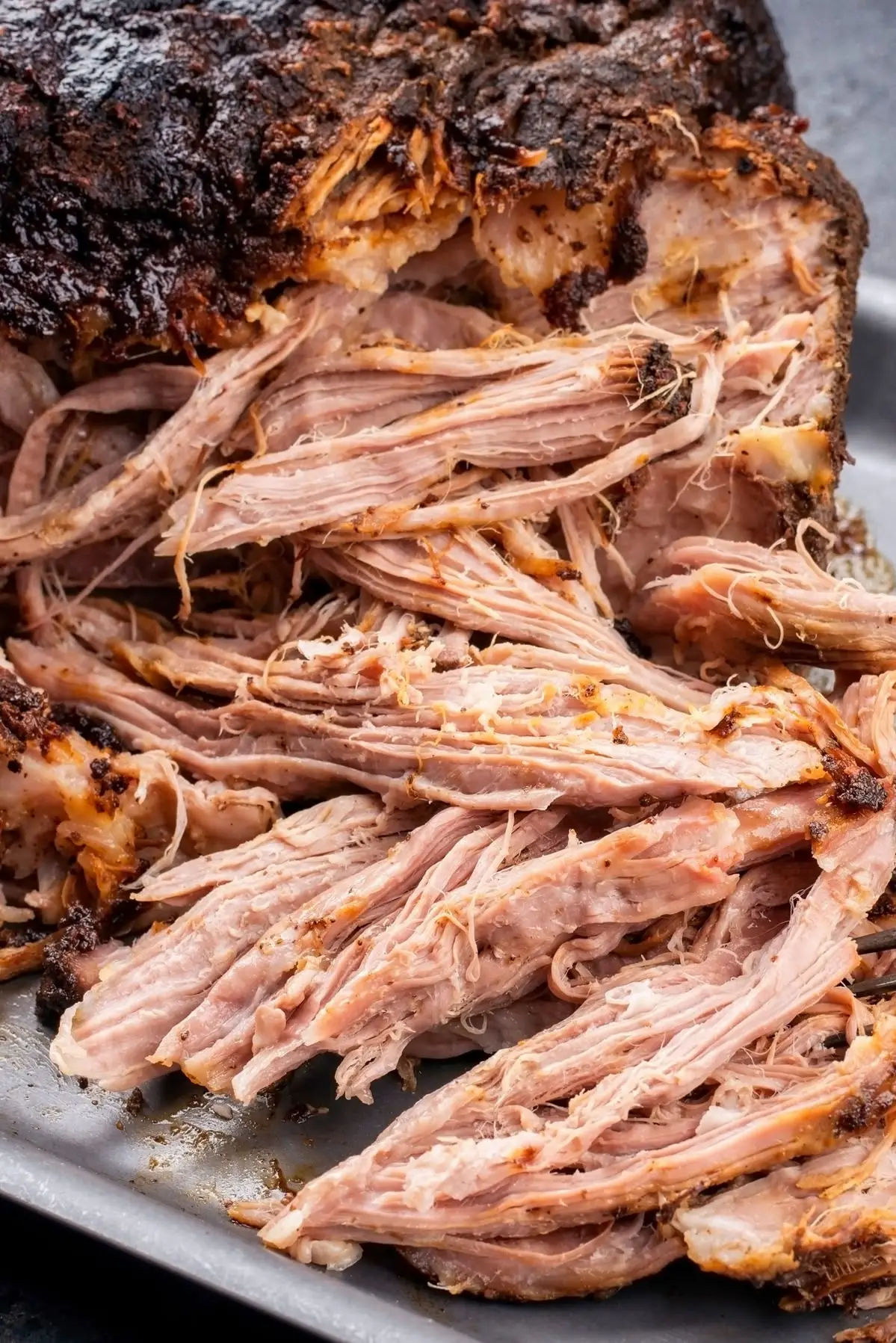
It’s at this exact point that the collagen and connective tissue fully break down, making the pork incredibly juicy and easy to pull.
Besides the thermometer, check the texture: when you insert the probe into the thickest part of the meat, it should slide in with almost no resistance. Once the pork butt is soft and yielding, it’s time to take it off the barbecue.
Let it rest while still wrapped, then collect the cooking juices and pull the meat apart with your hands or two forks.
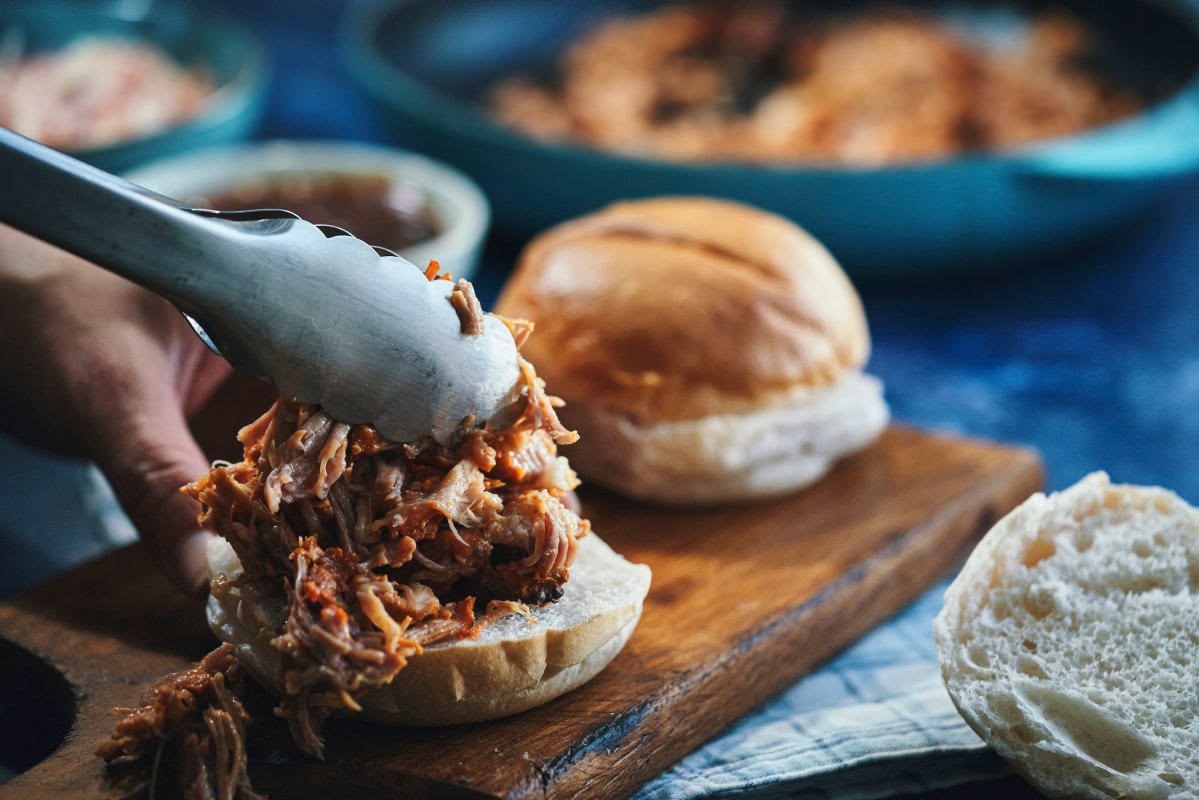
Mix the meat well with its cooking juices and your pulled pork is ready to serve.
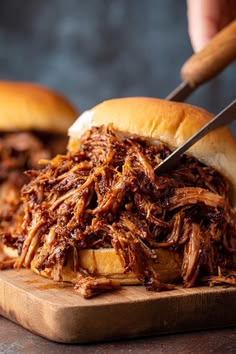
Enjoy it on its own or in a sandwich.
The secret to perfect pulled pork?
Meat in the center, side burners lit, indirect cooking and the lid closed: that’s the secret to bringing a tender, juicy, flavor-packed pulled pork to the table.